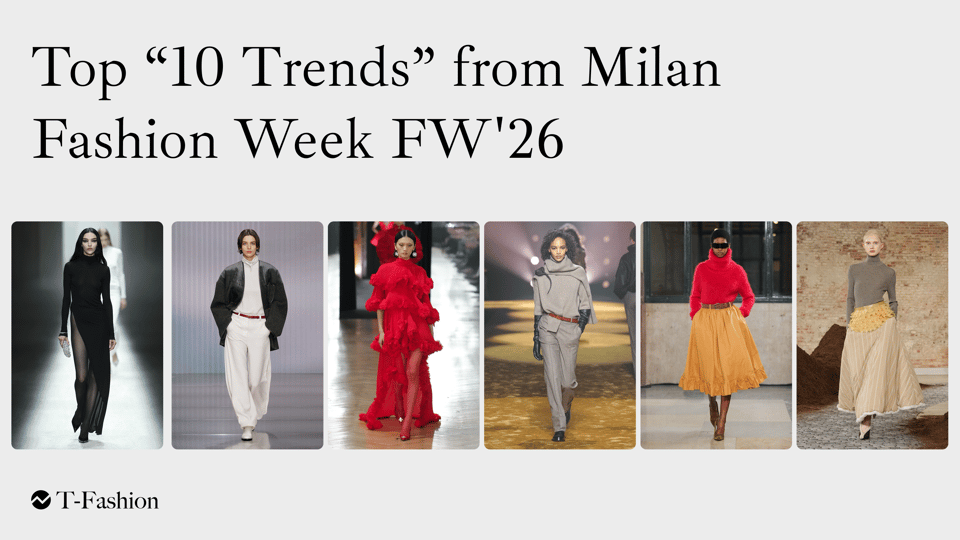
Milan Fashion Week has officially reclaimed its title as the capital of craft, and the industry is buzzing with talk of a "new era of power." This season, the runway wasn't just about clothes; it was about architecture. Structured tailoring took the spotlight, moving away from the relaxed fits of previous years toward sharp, unapologetic shapes and daring silhouettes. From masterful layering to a bold reimagining of the classic suit, the message was clear: precision is back. Let’s break down the standout looks and dive into the top 7 trends that will be driving the fashion conversation this season.
The Maxi High Neckline Dresses
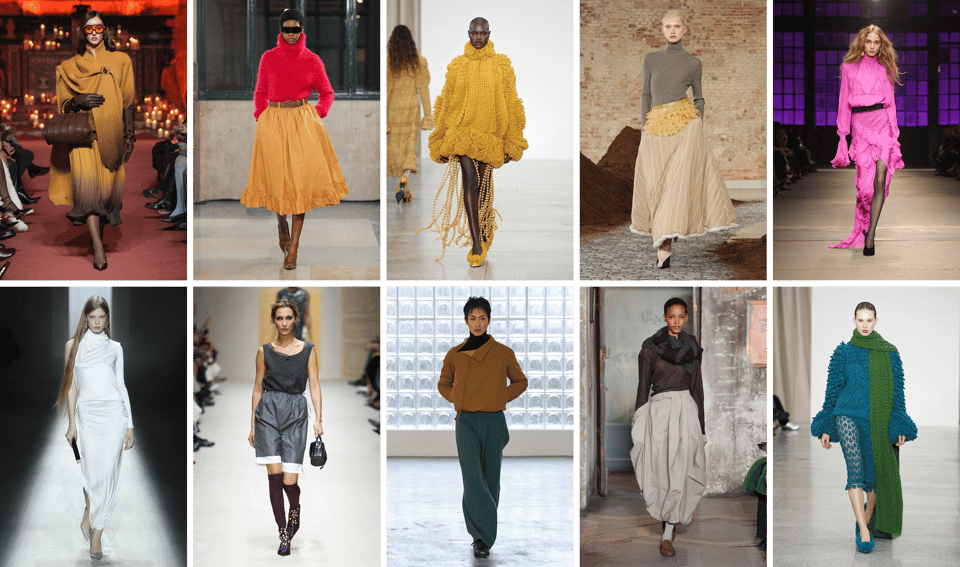
We kick off our series on Milan Fashion Week’s key trends with one of the season’s clearest runway dominators and a piece that best captures FW26’s structured tailoring spirit: the Maxi High Neckline Dress.
This season in Milan, elegance was redefined through the sculptural silhouette created by high necklines and maxi lengths. With an impressive +63.9% growth, this trend appeared across 78 looks from 30 designers a clear signal that these “new-generation power pieces” are gaining real momentum. Here are the key details and metrics behind the rise:
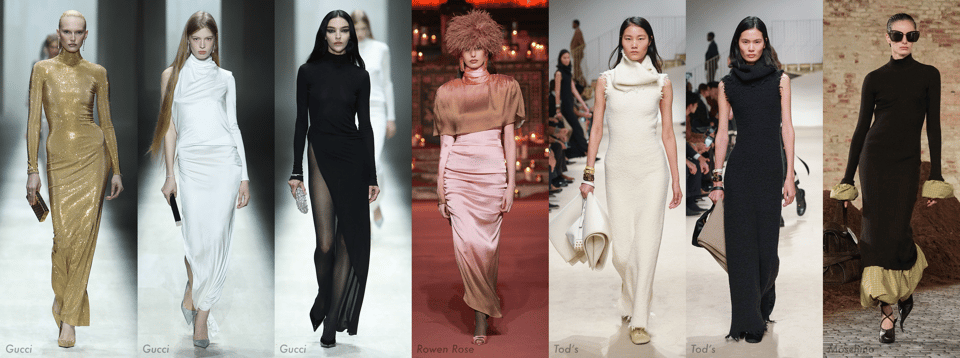
With 3.5% visibility, the Maxi High Neckline Dress stands out for its sharp forms and confident stance.
Color Palette:
Black leads (35%) with timeless authority, while rich chocolate tones (14%) emerge as a season favorite. Lighter accents white (6%) and sand (6%) add freshness and contrast to the silhouette.
Texture & Pattern:
A strong plain dominance (64%) keeps the focus on structure, cut, and seam work letting tailoring do the talking. Meanwhile, florals (15%) introduce a romantic counterpoint to the architectural shape.
Leading Designers:
The runway’s strongest adopters include Alberta Ferretti (12 looks), Luisa Beccaria (9 looks), J. Salinas (8 looks), and Gucci (5 looks) brands that helped define the trend’s most directional expressions.
The Ruffled Dresses
Next in our Milan Fashion Week FW26 series is a trend that proves romance can be just as architectural as tailoring: Ruffled Dress. This season, ruffles aren’t treated as a soft afterthought—they’re used as construction, building volume, texture, and rhythm into the silhouette.
With an explosive +143.7% growth and 1.4% visibility on the Milanese runways, the Ruffled Dress reads as a high-momentum signal: not yet the most dominant, but accelerating fast. In total, 10 designers delivered 32 looks, suggesting the trend is scaling quickly through a focused set of runway voices.
Here are the key details and runway metrics shaping the trend:
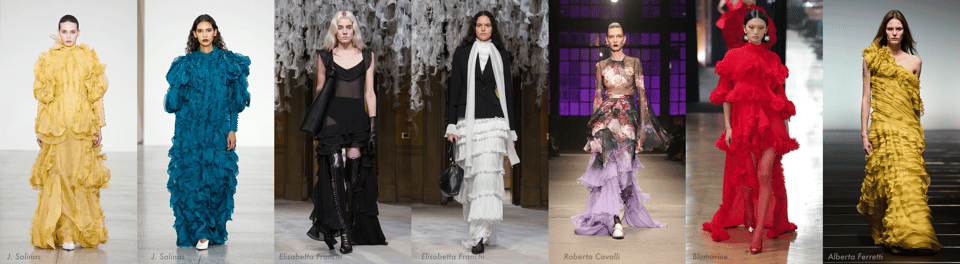
The ruffle story is reinforced by strong supporting attributes: High Necklines (59%) and Long Sleeves (56%) introduce control and coverage, while Maxi lengths (53%) and No-Waist silhouettes (53%) amplify the garment’s sculptural, uninterrupted flow. The overall mood leans distinctly occasion-led (Party: 56%) dramatic and elevated.
Color Palette:
While anchor shades like Black (25%), White (13%), and Chocolate (13%) remain present, the key story for FW26 ruffled dresses is color. Statement tones Teal (9%), Navy (9%), Mustard (9%), and Scarlet (9%) show up as clear runway signals, making ruffles feel bold and expressive.
Fabric:
Texture is the message. Ruffles dominate the fabric story (94%), often paired with Chiffon (44%) to keep the volume light and mobile. Smaller touches of Lace (9%) and Sheer (9%) add an evening-wear edge and enhance the layered dimension.
Pattern:
Just like the high-neck and volume narratives, the focus stays on form. Plain finishes lead (75%), allowing the construction and movement to take center stage, while Florals (13%) introduce a romantic counterpoint without overwhelming the silhouette.
Leading Designers:
The strongest runway drivers include J. Salinas (12 looks), followed by Blumarine (5) and Roberto Cavalli (5), Alberta Ferretti (2), Elisabetta Franchi (2), and Etro (2) brands translating ruffles into distinctly Milan-coded glamour.
The Voluminous Skirts
In Milan runways, designers moved away from flat silhouettes, opting instead for skirts that occupy space with confidence. Characterized by high-rise waists and gathered textures, these pieces bring a sense of "edgy occasion" to the everyday wardrobe, proving that volume is the new focal point of structured styling.
With 30.1% growth and a 3.2% visibility share across Milanese runways, voluminous skirts are rising with steady momentum. The breadth is equally telling: 26 designers delivered 71 looks, signaling a broad industry shift toward more expressive, flared silhouettes.
Here are the key details and runway metrics driving the trend:
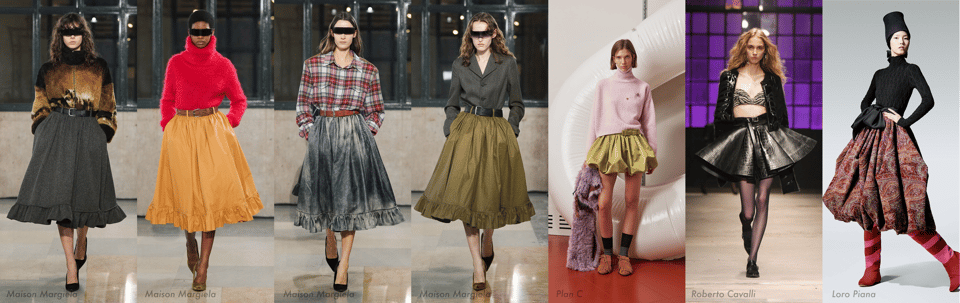
Among the defining attributes, High Rise waists (46%) lead the direction, often supported by Gathered (34%) construction and Midi lengths (34%) a balancing act that keeps the silhouette powerful without losing proportion.
Color Palette:
The mood is deep and sophisticated. Black dominates (45%), reinforced by Chocolate (13%), while Mustard (4%) appears as a controlled seasonal accent just enough to sharpen the statement.
Fabric:
Structure comes from material choice: Woven fabrics (93%) are the foundation, Satin (14%) and Sheer (%10) adding a more luxurious, architectural sheen to the folds and volume.
Pattern:
A clear preference for minimalism keeps the focus on form. Plain designs lead (70%), ensuring attention stays on the “brave shapes” and the dramatic movement of the garment.
Leading Designers:
The runway’s strongest voices include MM6 Maison Margiela (9 looks), followed by Diesel (6 looks) and Prada (6 looks), Moschino (5 looks), Plan C (5 looks) and Roberto Cavalli (4 looks) each interpreting volume through their own lens.
The Barrel Pants
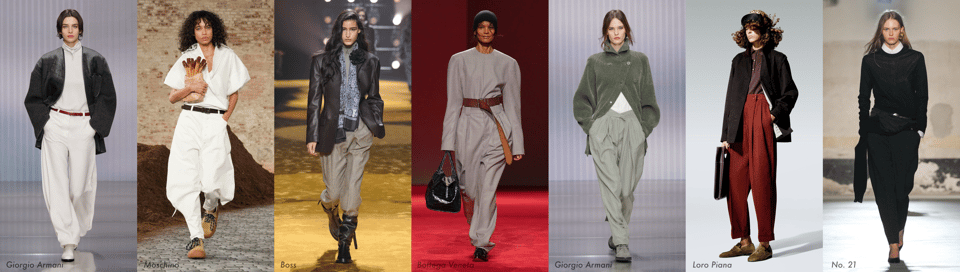
Often referred to as "horseshoe" or "balloon" pants, the barrel silhouette has transitioned from a niche experimental cut to a seasonal essential. Characterized by a voluminous leg that tapers sharply at the ankle, these pants offer a "brave shape" that feels both grounded and high-fashion. They represent an evolution of the harem pants refined through Smart tailoring and heavy fabrics to provide a structured, industrial look.
With +110.7% growth, the Barrel Pant emerges as a key driver for FW'26, backed by meaningful runway scale. In Milan, 20 designers adopted the shape across 51 looks.
Here are the key details:
Silhouette:
The shape stays intentional through precise finishing: Ankle lengths lead (67%), paired with double pleated (31%) to keep the volume clean, structured, and refined rather than exaggerated.
Fabric:
To hold the signature barrel curve, weight matters. Woven fabrics dominate (88%), with Twill (65%) providing the density and architecture needed for a crisp, sculpted line.
Color Palette:
Neutral sophistication defines the category. Black leads (31%), followed by Chocolate (18%), with earthy shades like Taupe and Charcoal reinforcing the season’s quiet luxury mood.
Pattern:
Minimalism remains the default: Plain designs account for 73%, allowing the silhouette to speak. A smaller 8% checked share introduces a heritage note without shifting the trend away from its clean, modern core.
Leading Designers:
The strongest runway drivers are led by Giorgio Armani (7 looks) and Loro Piana (7 looks), followed by Act No.1 (6 looks), Moschino (6 looks), Bottega Veneta (3 looks), Boss (2 looks), and Dolce & Gabbana (2 looks) together reinforcing the Barrel Pant as a cross-aesthetic silhouette spanning quiet luxury to soft tailoring dressing.
The Pussy Bow Blouses
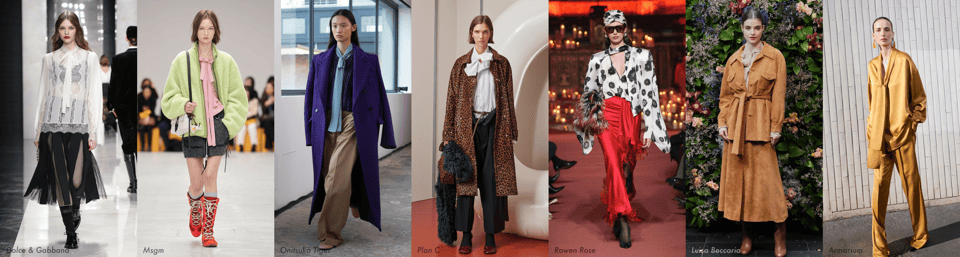
Refined Romance meets Power Dressing, the Pussy Bow Blouse has emerged as the ultimate layering essential for Fall/Winter 2026. This season, it’s less about dainty vintage aesthetics and more about "Smart", polished silhouettes that sit perfectly under structured blazers or oversized coats.
A +197.9% growth positions the Pussy Bow Blouse as an “exclusive riser” a sharply accelerating trend that’s still early in its runway lifecycle.
Here are the key details and runway metrics shaping the trend:
Color Palette:
A restrained palette keeps the mood “smart.” White leads (36%), and Plain finishes dominate (55%), ensuring the bow detail stays crisp and the blouse remains versatile across tailoring and layered looks.
Fabric:
Quality and fluidity are central. Woven fabrics account for 100% of the category, with Satin (36%) and Chiffon (27%) adding that essential liquid movement and polished drape.
Leading Designers:
The strongest runway contributions come from Onitsuka Tiger, Brunello Cucinelli, Dolce & Gabbana, and Genny, Giorgio Armani reinforcing the bow’s return as a modern wardrobe signal.
The Cowl Sweaters
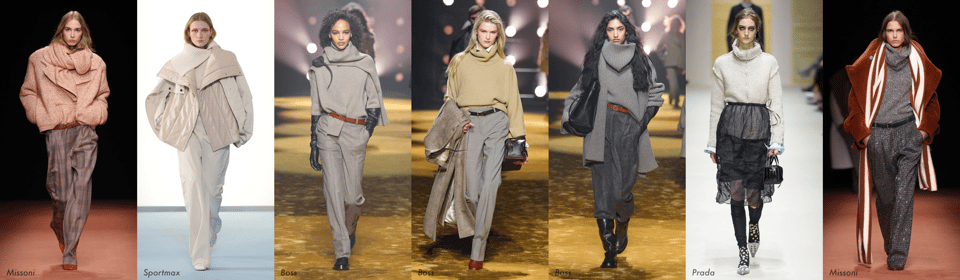
The cowl neck has transitioned from a basic knit to a "smart" layering powerhouse. It provides a draped, intellectual contrast to the season's sharper shapes, making it a favorite for those who value both comfort and high-fashion architecture.
Silhouette:
Most designs lean streamlined and wearable: Pullover constructions dominate (89%), paired with Long Sleeve lengths (56%) and Drop Shoulder (22%) a functional base that lets the neckline do the visual work.
This is where the trend becomes especially modern. Oversized fits lead (56%), yet Smart classifications remain strong (50%), proving that volume can still read professional when the fabric and finishing are elevated.
Fabric:
The cowl effect is built through craft. Draped finishes lead (56%), maximizing the natural fall of the neckline, while Fine Gauge knits (33%) introduce a lighter, layered feel that’s easy to style under tailoring.
Color Palette:
The story stays aligned with Milan’s neutral backbone. Steel leads (22%), supported by Black (17%) and Chocolate (17%).
Leading Designers:
The runway’s strongest driver is Giorgio Armani (4 looks), followed by Boss (2 looks), Emporio Armani (2 looks), Missoni (2 looks) and Dolce & Gabbana (1 look) a lineup that positions the cowl not as a throwback detail, but as a refined, modern knitwear signal.
"Steel" Color
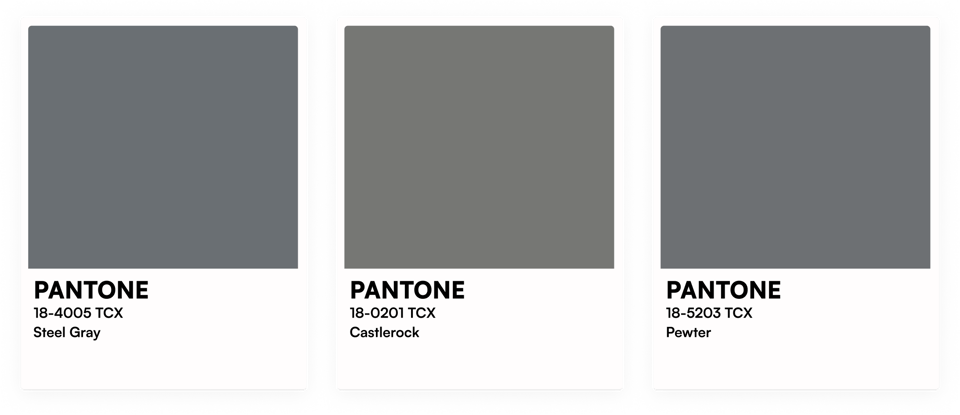
If the season’s "structured tailoring" had a primary signature, it would be Steel. Acting as the backbone of the Fall/Winter 26 collections, Steel provides a cold, polished edge that perfectly complements the sharp shapes and heavy layering seen on the runways.
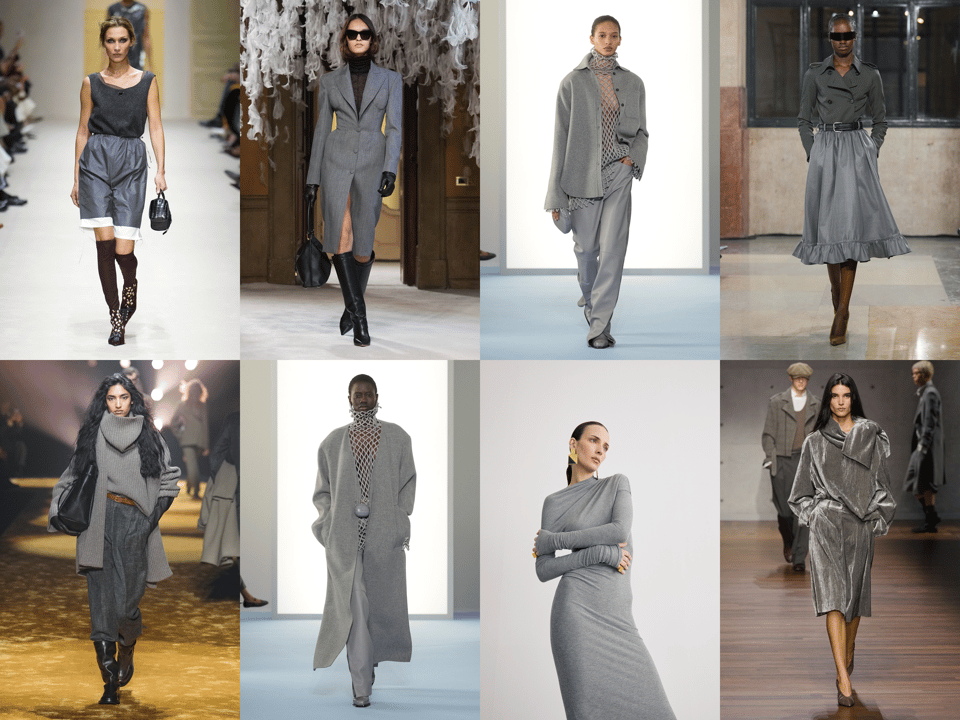
Steel commands a significant 8.9% visibility share, making it one of the most dominant color stories in Milan. It featured in 199 looks across 45 designers, showing a solid 10.5% growth compared to previous year.
Steel appears most prominently in Pants 26%, Jacket 14% and Dress 12%.
Top Contributors:
Brunello Cucinelli – 15 looksMarco Rambaldi – 11 looksMoschino – 11 looksPrada – 11 looksEmporio Armani – 9 looksGiorgio Armani – 9 looksHed Mayner – 9 looksPronounce – 9 looksDiesel – 8 looks
"Mustard" Color
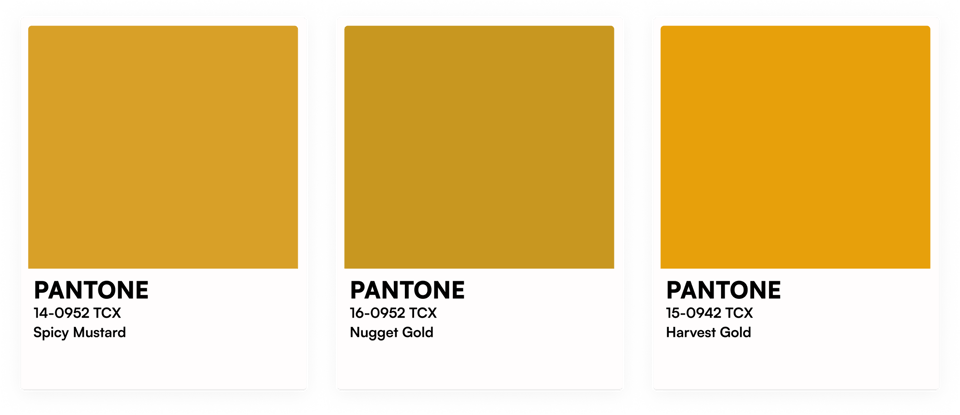
Contrasting the cold industrialism of Steel is a vibrant, sophisticated Mustard. It is a warm, complex tone infused with soft apricot and tangerine undertones. It serves as the emotional warmth within the season’s rigid architecture, appearing most effectively in plush knitwear and sweeping outer layers.
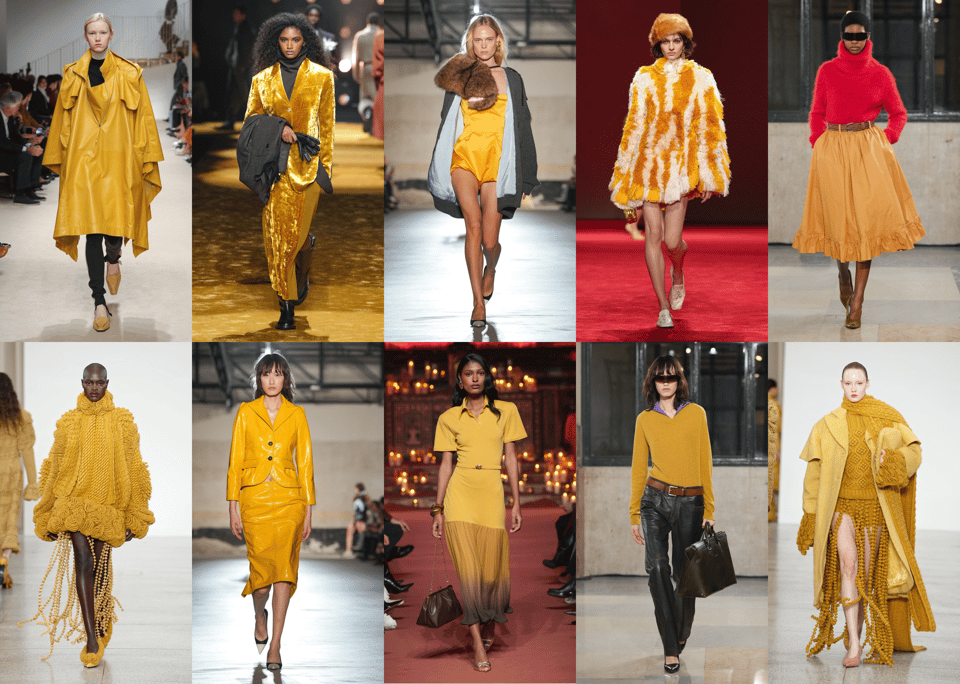
This specific hue is a rising star with 2.8% visibility share across runways and a 32.4% growth compared to previous year.
Mustard is seen across multiple categories, with its strongest showing in Sweaters (24%) and Coats (21%). It also plays a defining role in Pants (16%), Jackets (14%), and Skirts (11%).
Top Contributors:
J. Salinas – 6 looksRowen Rose – 6 looksMM6 Maison Margiela – 5 looksMoncler Grenoble – 5 looksMoschino – 5 looksPronounce – 5 looksLoro Piana – 4 looksPlan C – 4 looks
"Floral" The Romantic Counterpoint
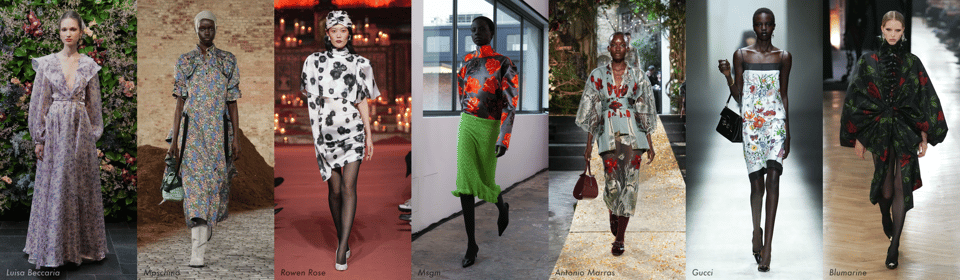
In a season defined by "brave shapes" and industrial steel tones, florals emerged as the vital emotional anchor. This isn't just a spring print; for FW 26, Milanese designers utilized florals to soften structured tailoring, creating a sophisticated dialogue between rigidity and fluid, botanical beauty.
Florals hold a massive 10.1% visibility share, marking them as one of the most prominent patterns of the season. The pattern was featured in 227 looks across 33 designers, maintaining a 17.2% growth compared to previous year.
Crocodile
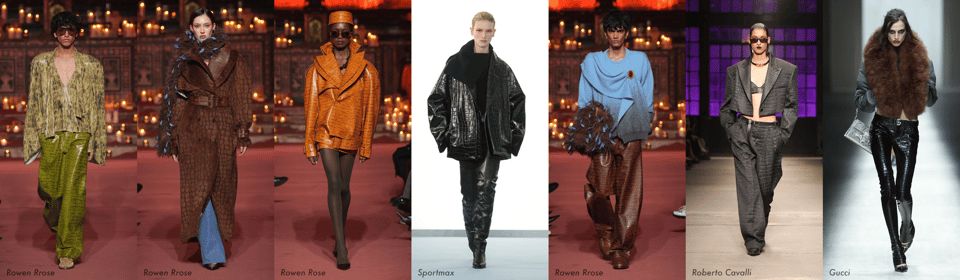
Crocodile is more than just a print, this trend is defined by its masterful execution: 74% of these looks rely on rich, crocodile-embossed leather, where heat and pressure create a deeply textured, sculptural surface that mimics exotic skin with impeccable precision. This tactile depth adds a layer of "armor" to the season's sharpest silhouettes, perfectly aligning with the overarching theme of structured tailoring.
Crocodile has solidified its status as a breakout star, recording a staggering 101.3% growth compared to last season.
Leading Designers:
The trend made a high-impact appearance in 19 runway looks, championed by 5 key visionaries, led by Rowen Rose (9 looks), Roberto Cavalli (3 looks), and Sportmax (3 looks).
Fabric:
With 74% of the trend centered on embossed leather, the focus remains on high-grade material quality, while 21% explores intricate Jacquard adaptations.