For fashion brands
Fashion intelligence, across the brand
A data-driven design platform for the season. Read by design, merchandising, product, buying, and strategy.
- Cross-team alignment
- Data-driven analysis
- Designer-native outputs

Chanel · FW26
12-0722
18-1662
16-1439
13-4308
Season palette · TCX





— On fashion brands
"A brand cannot move at runway speed if every team is reading a different version of the season."
01 — The pattern
Where fashion brands lose time
-
Fragmented research
Trend reports, image search, internal decks, and ad-hoc AI tools spread across every team. The next collection brief gets stitched together from sources no one trusts the same way.
-
Slow seasonal alignment
Design, merchandising, and buying read the season through different lenses. Decisions take longer because there is no shared, data-driven picture of what is moving.
-
Pressure on the calendar
Sample rounds, sell-in windows, and campaign timing keep compressing. Teams need direction earlier, not retrospective season summaries.
-
AI tooling skepticism
Generic AI image tools produce pictures with no fashion grounding. Strategy and innovation leaders need defensible, data-driven AI to bring inside the brand.
02 — The workflow
From source to action, four steps
The same workflow runs across every team. The artifacts and language change with the role.
- 01
Read the signal
Capture runway, presentation, and street-level signal at the silhouette, color, fabric, print, and category level.
- 02
Find the references
Search by theme, visual similarity, or natural language to connect emerging directions with relevant looks, details, and design references.
- 03
Generate direction
Turn signal and references into AI-assisted concept variants grounded in real fashion structure.
- 04
Align the team
Pull everything into shared moodboards, comments, and exports the team and stakeholders can act on.
03 — Sample outputs
What fashion brands can act on
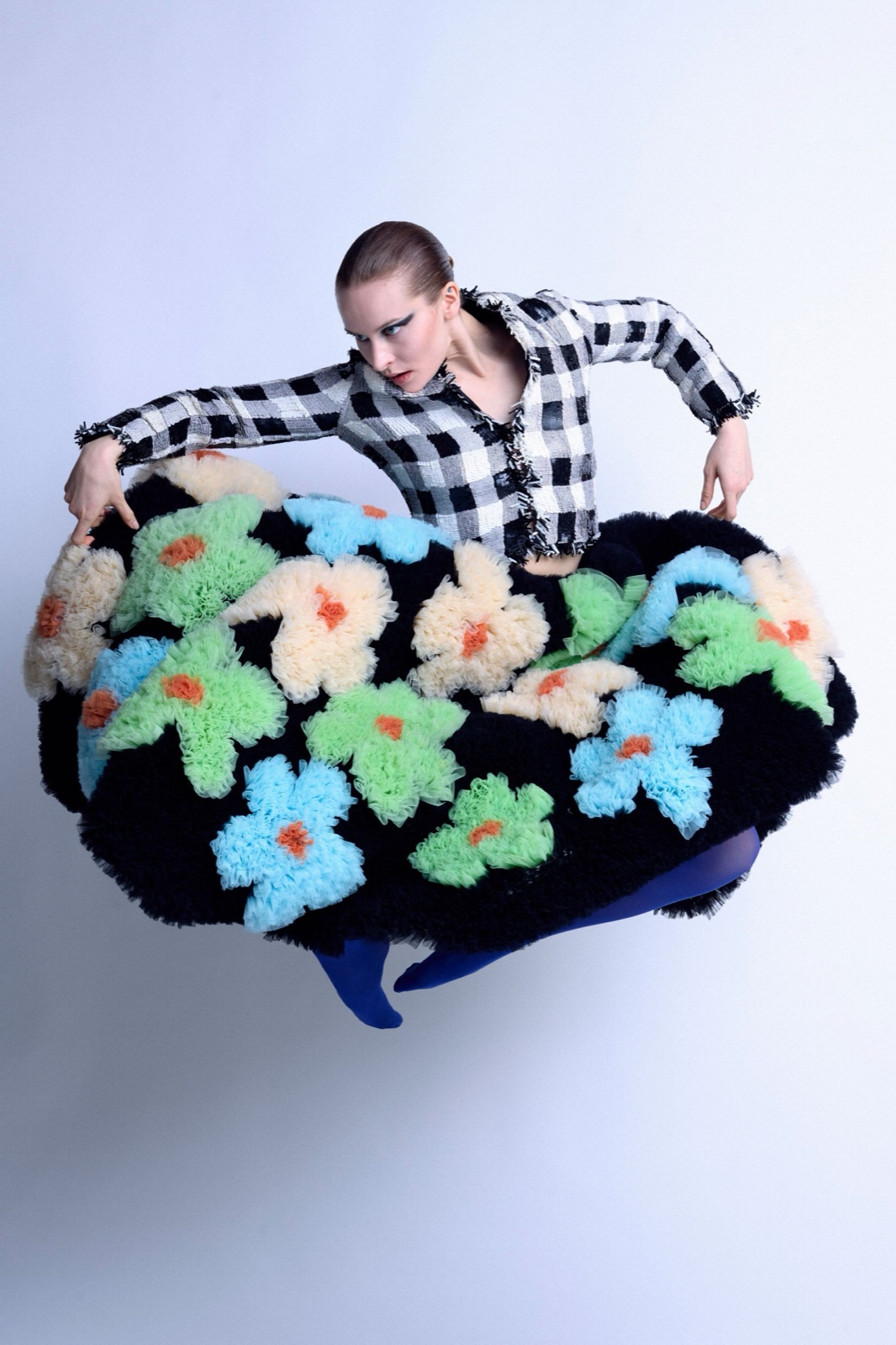
Ashish · FW26 · Look 18
-
Season Direction
Color, silhouette, fabric, motif, and styling signals shaping the season.
-
Category Momentum
See which categories, product types, and details are gaining visibility across markets and segments.
-
Brand Direction Tracking
See how brands move season by season, from signature codes to new directions.
-
Strategic Readout
A concise summary of what the season means for brand, category, and collection strategy.
-
Shared Intelligence Layer
A collaborative space where teams can access, revisit, and build on runway insights whenever decisions need to be made.
04 — Use cases
Where runway intelligence supports your week
Use runway-backed insights across collection, buying, merchandising, campaign, and leadership conversations — without rebuilding the same research each time.
-
01
Collection brief alignment
Run the same brief across design, merchandising, and product on one data-driven picture.
-
02
Assortment planning input
Bring category momentum and color direction into the seasonal assortment conversation.
-
03
Campaign and editorial direction
Connect runway signal to campaign concepts and editorial moodboards.
-
04
Sell-in narrative
Build the story buyers and partners need with structured trend evidence behind it.
-
05
AI workflow rollout
Pilot AI-assisted concept generation safely, with traceable inputs and clear ownership.
-
06
Moodboard and research library
Keep references, signals, and team comments in one shared space for ongoing collection work.
— Methodology
Data-driven, fashion-native, collaborative
-
01
Thousands of runway looks are structured into garment-level data, with every signal linked back to its show, season, designer, and image.
-
02
Pattern recognition, not guesswork. T-Fashion compares signals across seasons, designers, categories, colors, fabrics, and silhouettes to show what is gaining or losing momentum.
-
03
Fashion-native language. Each look is broken down into fashion attributes from category, silhouette, fabric, pattern, and motif to 2,800 Pantone TCX color mappings.
-
04
Collaborative decision layer. Teams work from the same layer of data, references, boards, and AI outputs without losing context.
FAQ
Common questions
Is T-Fashion for one team or the whole brand?
It is built to be used across design, merchandising, product, buying, trend, and strategy teams. Most brands start with one team and expand over time. Workspaces support team-level boards and shared seasonal direction.
How does it sit alongside our PLM, ERP, and existing trend subscriptions?
T-Fashion sits before PLM and ERP - direction, references, and concept exploration. It typically replaces external trend subscriptions and ad-hoc image research. Outputs flow into your existing tech-pack and merchandising tools.
Can our brand use this without a large data team?
Yes. T-Fashion is operated by design, merchandising, and trend teams directly. There is no internal data-science work required to read Fashion Week or category signals.
How do you handle our IP and customer data?
Workspace data is owned by the customer. Uploaded references, prompts, and AI outputs are not used to train shared models without explicit consent.
Where do I see a real example?
Book a tailored walkthrough on a season or category your team actually cares about. Or open the Fashion Week intelligence page to see a live season analysis.
Other teams
Same workflow, different lens
-
Design Teams
Runway analysis, built for design
View solution → -
Merchandising & Buying
Trend intelligence, for buying and merchandising
View solution → -
Product Development
Product-side intelligence, from brief to sample
View solution → -
Trend & Insights
Trend synthesis, at fashion week speed
View solution →
Get started
See it on your brand
Bring a season, a category, or a recent buyer brief. We will walk through how the workflow shows up for your specific team.