For product development
Product-side intelligence, from brief to sample
Tighten the gap between brief and sample. Structured fabric, silhouette, and construction signal your product team can ship from.
- Tech-pack-ready references
- Structured fabric signal
- Cleaner sample briefs
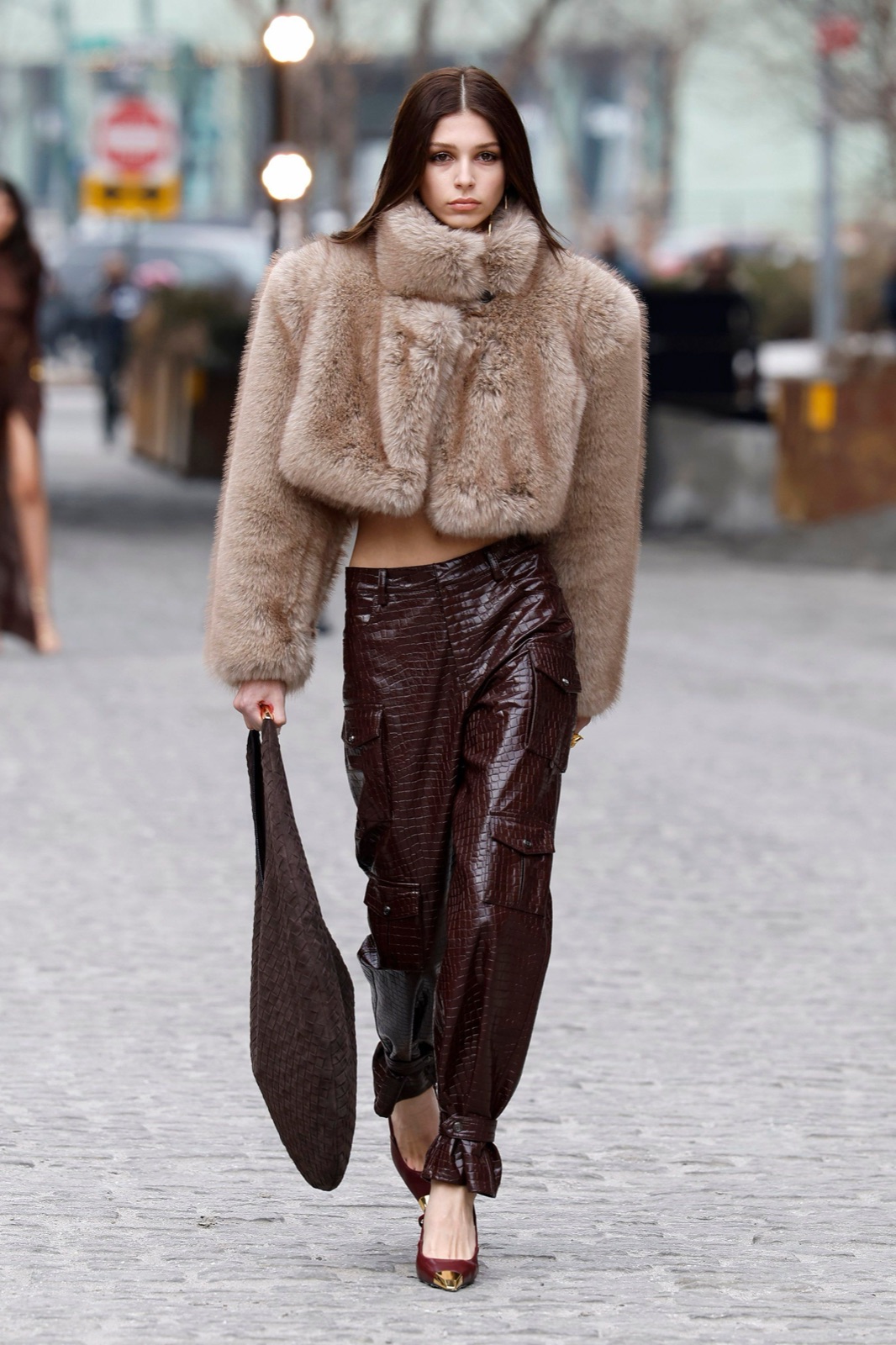
Bronx & Banco · FW26
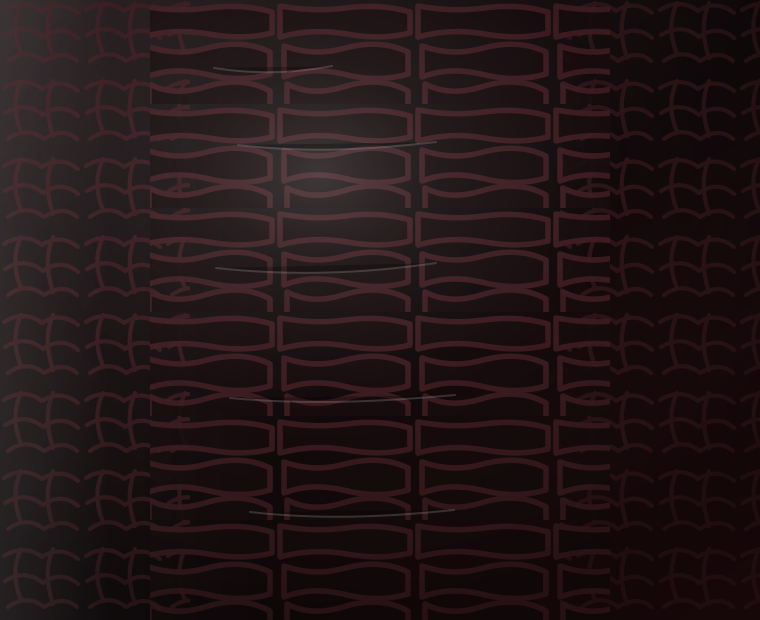
Material
Burgundy Croc
Embossed leather






— On product development teams
"When product direction is unclear, sampling slows down. Teams need trend-backed references, details, and decisions before development begins."
01 — The pattern
Where product development teams lose time
-
Briefs need clearer product detail
Mood images and trend language need to become clear product cues; category, fabric, silhouette, pattern, detail, and reference context.
-
Sample rounds add up
Unclear direction creates extra sampling, revisions, and calendar pressure across categories and suppliers.
-
Manufacturer and ODM alignment
Share visual references, product cues, and source context that travel clearly across teams, suppliers, and locations.
-
References need source context
Product teams need to know which show, season, designer, look, and garment details sit behind each reference.
02 — The workflow
From source to action, four steps
The same workflow runs across every team. The artifacts and language change with the role.
- 01
Read the signal
Capture runway, presentation, and street-level signal at the silhouette, color, fabric, print, and category level.
- 02
Find the references
Search by theme, visual similarity, or natural language to connect emerging directions with relevant looks, details, and design references.
- 03
Generate direction
Turn signal and references into AI-assisted concept variants grounded in real fashion structure.
- 04
Align the team
Pull everything into shared moodboards, comments, and exports the team and stakeholders can act on.
03 — Sample outputs
What product teams can act on
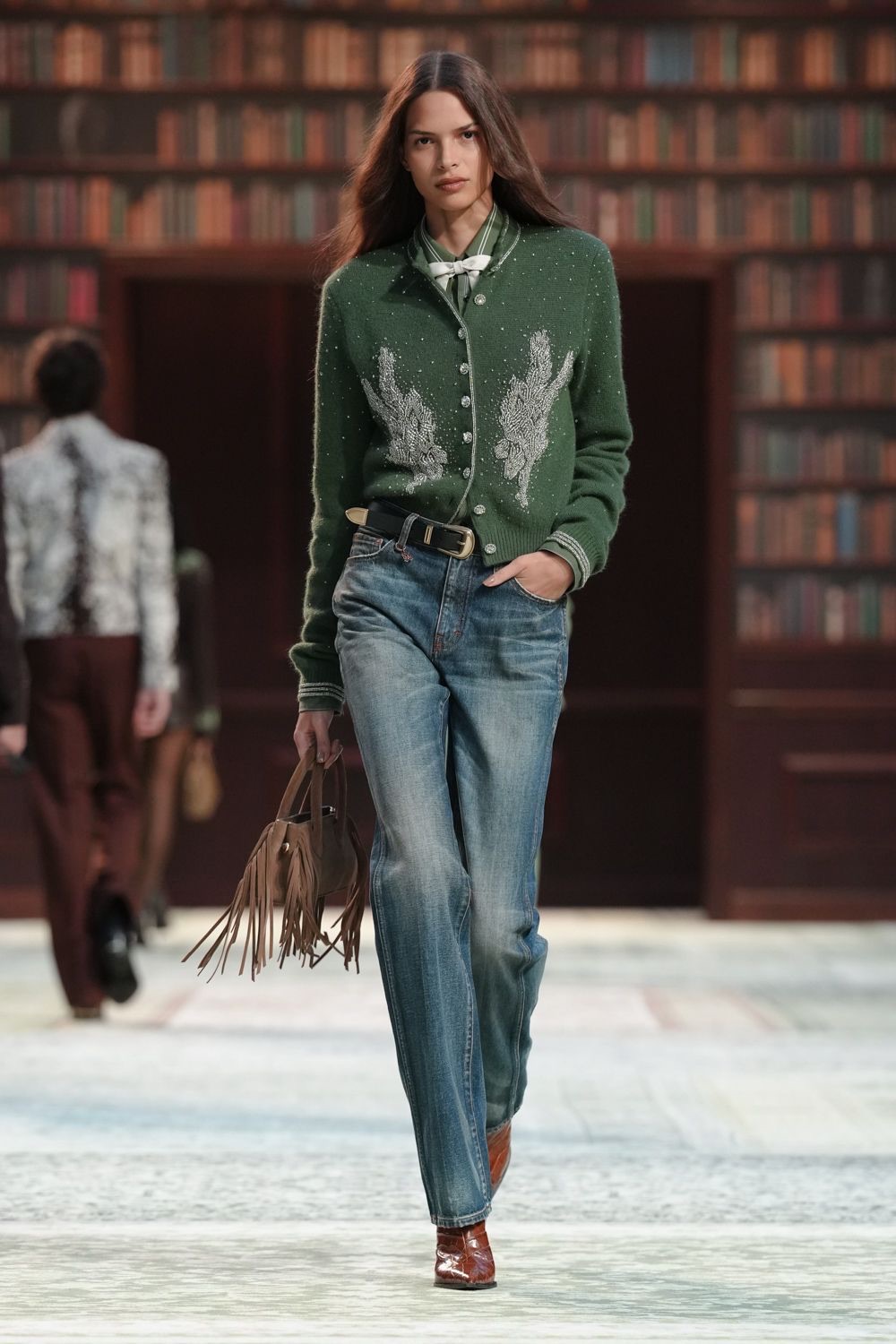
Amiri · FW26 · Look 30
-
Fabric and pattern direction
Track fabric and pattern signals across categories, from denim and leather to organza, checks, florals, and stripes.
-
Silhouette and garment details
Track fit, length, waist, shoulder, hem, volume, and product details across the season.
-
Color and detail direction
Pantone TCX-aligned color signals and garment details organized by category and product groups.
-
Development-ready reference boards
Build boards where every reference stays connected to its show, season, designer, look, and garment details.
-
Supplier-ready briefs
Turn references, product cues, and source context into clearer handoffs for ODMs, factories, and sample teams.
04 — Use cases
Where runway intelligence supports your week
Use runway-backed insights across collection, buying, merchandising, campaign, and leadership conversations — without rebuilding the same research each time.
-
01
From brief to sample
Turn creative direction into clearer product briefs with fabric, silhouette, pattern, color, and detail cues.
-
02
Supplier brief alignment
Give factories and ODMs briefs built on runway-backed references, product cues, and clear source context.
-
03
Capsule development
Move from seasonal direction to focused product ideas, references, and sample briefs for capsules or limited drops.
-
04
Category adaptation
Adapt runway-backed colors, fabrics, silhouettes, and details across your product categories.
-
05
Manufacturer-side direction
Help ODM and factory teams translate runway-backed signals into clearer product proposals and sample briefs.
-
06
Pre-sampling alignment
Align design, product, and supplier teams on the same references and product cues before samples are made.
— Methodology
Data-driven, fashion-native, collaborative
-
01
Thousands of runway looks are structured into garment-level data, with every signal linked back to its show, season, designer, and image.
-
02
Pattern recognition, not guesswork. T-Fashion compares signals across seasons, designers, categories, colors, fabrics, and silhouettes to show what is gaining or losing momentum.
-
03
Fashion-native language. Each look is broken down into fashion attributes from category, silhouette, fabric, pattern, and motif to 2,800 Pantone TCX color mappings.
-
04
Collaborative decision layer. Teams work from the same layer of data, references, boards, and AI outputs without losing context.
FAQ
Common questions
How does T-Fashion help product development?
It translates runway and market signal into structured fabric, silhouette, and construction direction your product team can act on - so briefs land cleaner and sample rounds tighten.
Does it work for ODM and factory-side teams?
Yes. Manufacturers and ODMs use T-Fashion to build buyer-ready proposals grounded in real runway and trend signal.
How does this fit alongside our PLM and tech-pack tools?
T-Fashion sits before PLM. Outputs (concepts, direction, structured references) become inputs into your existing tech-pack and production stack.
Can we attach references with full attribution?
Yes. Every reference is linked back to its show, season, designer, and look context - which transfers cleanly into the tech-pack.
Does it cover accessories and footwear development?
Yes. Coverage spans accessories, footwear, jewelry, and headwear with the same fabric, finish, and construction-level signal.
Other teams
Same workflow, different lens
Get started
See product-side signal
Bring a category, a recent brief, or a sample round you want to tighten. We will walk through how product teams put T-Fashion into the development calendar.