For merchandising & buying
Trend intelligence, for buying and merchandising
Bring runway-backed momentum into assortment and sell-in decisions before the market moves.
- Category momentum
- Comparable data
- Sell-in narrative
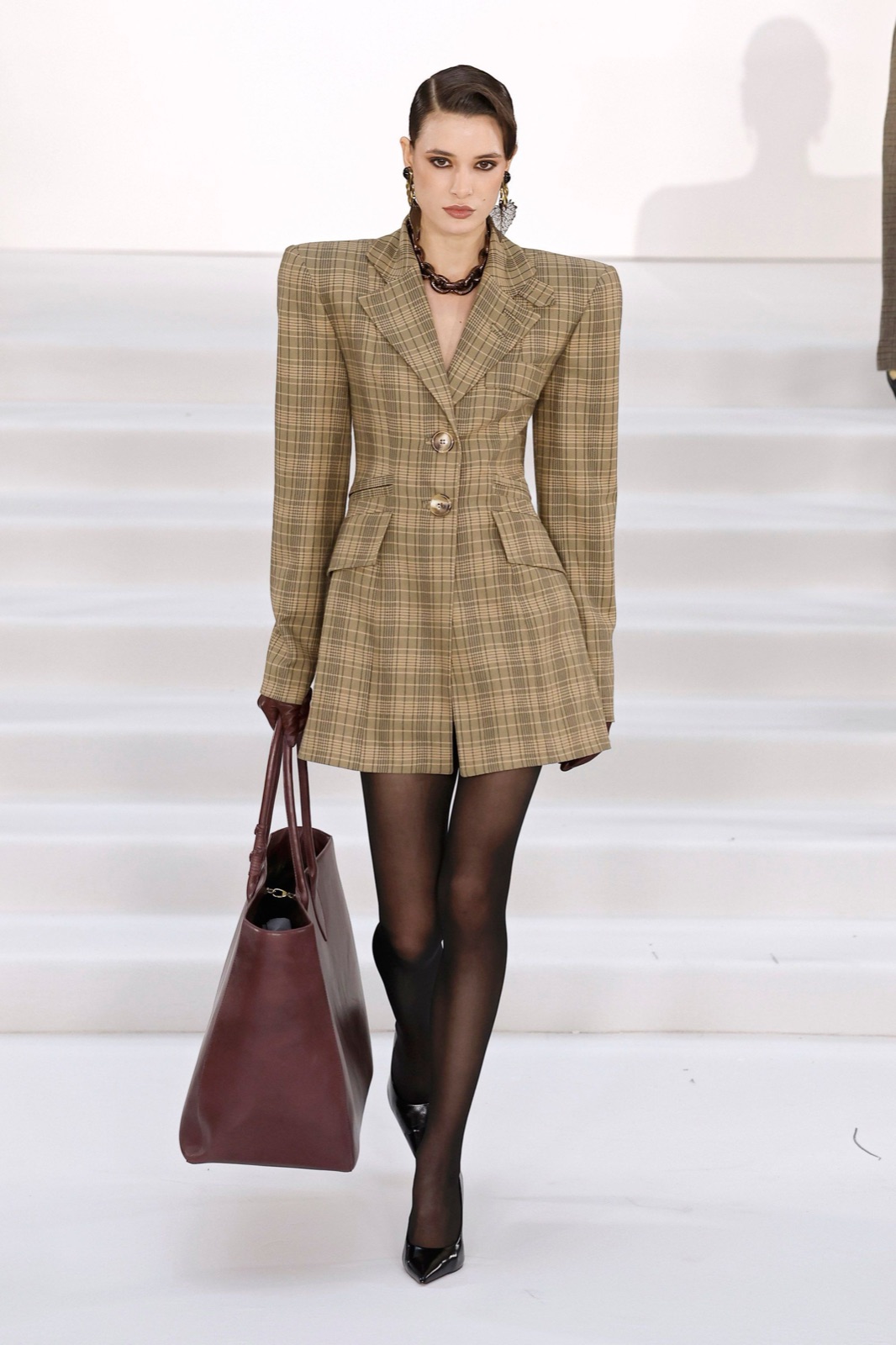
Paul Costelloe · FW26
Pantone
Olive Plaid
16-0526 TCX






— On merchandising and buying teams
"Merchandising and buying teams need to know what sold, what is shifting, and where to place the next bet."
01 — The pattern
Where merchandising and buying teams lose time
-
Past performance needs runway context
Connect last season’s sales performance with the runway signals shaping what comes next.
-
A shared view with design
Align design and merchandising around the same trend direction, product signals, and runway evidence.
-
Momentum before commitment
Understand which colors, fabrics, categories, and product details are gaining or losing momentum before buy and range decisions are locked.
-
Shared evidence for action
Turn trend direction into data-backed decisions your buying, merchandising, and design teams can act on together.
02 — The workflow
From source to action, four steps
The same workflow runs across every team. The artifacts and language change with the role.
- 01
Read the signal
Capture runway, presentation, and street-level signal at the silhouette, color, fabric, print, and category level.
- 02
Find the references
Search by theme, visual similarity, or natural language to connect emerging directions with relevant looks, details, and design references.
- 03
Generate direction
Turn signal and references into AI-assisted concept variants grounded in real fashion structure.
- 04
Align the team
Pull everything into shared moodboards, comments, and exports the team and stakeholders can act on.
03 — Sample outputs
What fashion brands can act on

Giuseppe Di Morabito · FW26 · Look 14
-
Category momentum
Track growth and visibility across categories, sub-categories, and product types by region and season.
-
Color & Fabric Movement
Track color and fabric visibility by category, product group, designer, and season.
-
Comparable brand reads
See how comparable brands and tiers are moving across categories, colors, silhouettes, and product groups.
-
Fast Post-Runway Signals
Access trend data as runway signals emerge, so buying and sell-in calendars can move faster.
-
Sell-in Narrative
Build a clearer story for why a category, color, silhouette, or product direction deserves space.
04 — Use cases
Where runway intelligence supports your week
Use runway-backed insights across collection, buying, merchandising, campaign, and leadership conversations — without rebuilding the same research each time.
-
01
Seasonal assortment planning
Bring runway-backed category, color, fabric, and item signals into assortment decisions alongside past performance.
-
02
Range reviews
Align buying, merchandising, and design around the same trend evidence, references, and product signals.
-
03
Wholesale and retail sell-in
Support partner conversations with evidence for why a category, color, silhouette, or product direction deserves space.
-
04
Price tier and competitor reads
Compare brand direction across seasons and against peer brands by category, color, silhouette, and product group.
-
05
Retailer-line development
Use runway-backed signals to shape private-label and retailer-line direction with clearer category, color, and product context.
-
06
Trend comparison
Compare items, colors, fabrics, and designers side by side by growth, visibility, and category breakdowns.
— Methodology
Data-driven, fashion-native, collaborative
-
01
Thousands of runway looks are structured into garment-level data, with every signal linked back to its show, season, designer, and image.
-
02
Pattern recognition, not guesswork. T-Fashion compares signals across seasons, designers, categories, colors, fabrics, and silhouettes to show what is gaining or losing momentum.
-
03
Fashion-native language. Each look is broken down into fashion attributes from category, silhouette, fabric, pattern, and motif to 2,800 Pantone TCX color mappings.
-
04
Collaborative decision layer. Teams work from the same layer of data, references, boards, and AI outputs without losing context.
FAQ
Common questions
How does T-Fashion help merchandising and buying teams?
It surfaces category momentum, color and material direction, and comparable brand reads in a structure buyers and merchandisers can act on - not generic forecasts.
Can we see data for specific product groups, such as jeans?
Yes. You can explore specific product groups and see how colors, attributes, patterns, and brand distribution are moving within that category.
Does this connect to our PLM or ERP?
T-Fashion sits before PLM and ERP. Outputs (boards, direction, references) become inputs into your existing assortment and tech-pack tools.
Is it suitable for compressed retail calendars?
Yes. Fashion Week intelligence is updated in near real time during each week, and growth signals surface accelerating directions early - useful for fast retail and private-label calendars.
How do design and merchandising share a workspace?
Workspaces are team-level by default and support shared projects across design, merchandising, buying, and product functions.
Other teams
Same workflow, different lens
Get started
See category signal on your buy
Bring a category, a tier, or an upcoming buy meeting. We will run a sample analysis and walk through how merchandising teams put it into the calendar.