
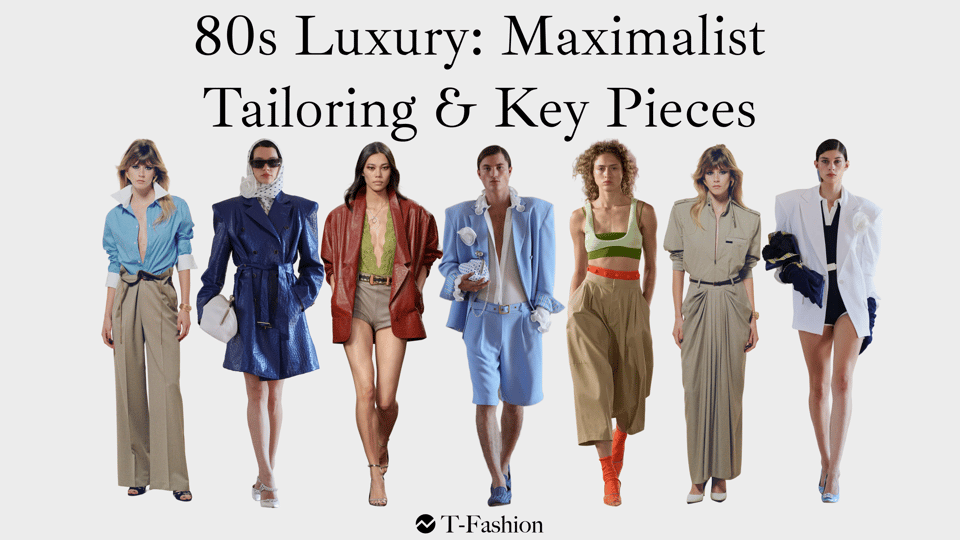
What is the 80s luxury aesthetic?
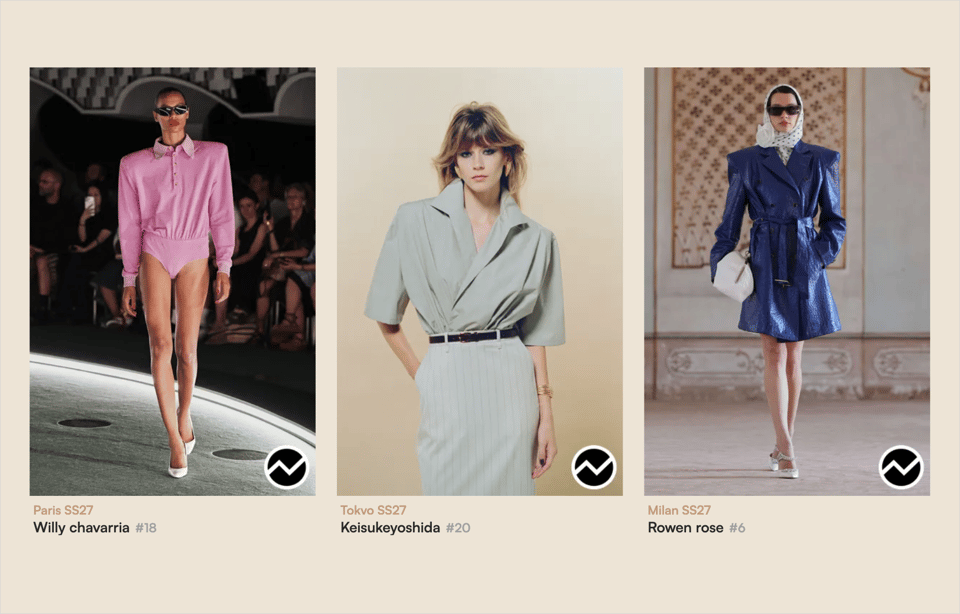
The 80s luxury aesthetic uses tailoring, pronounced proportions and conspicuous accessories to create a sense of presence. Broad shoulders, generous trousers, high necklines and polished metal details form its visual vocabulary. In collection development, the useful idea is that a garment can communicate confidence through its outline before anyone notices its decoration.
Think of a charcoal jacket with a precise shoulder, trousers that fall generously from the hip, and a gold cuff visible beneath the sleeve. Each element has a job. The jacket establishes authority, the trousers introduce movement, and the cuff draws the eye to a single point.
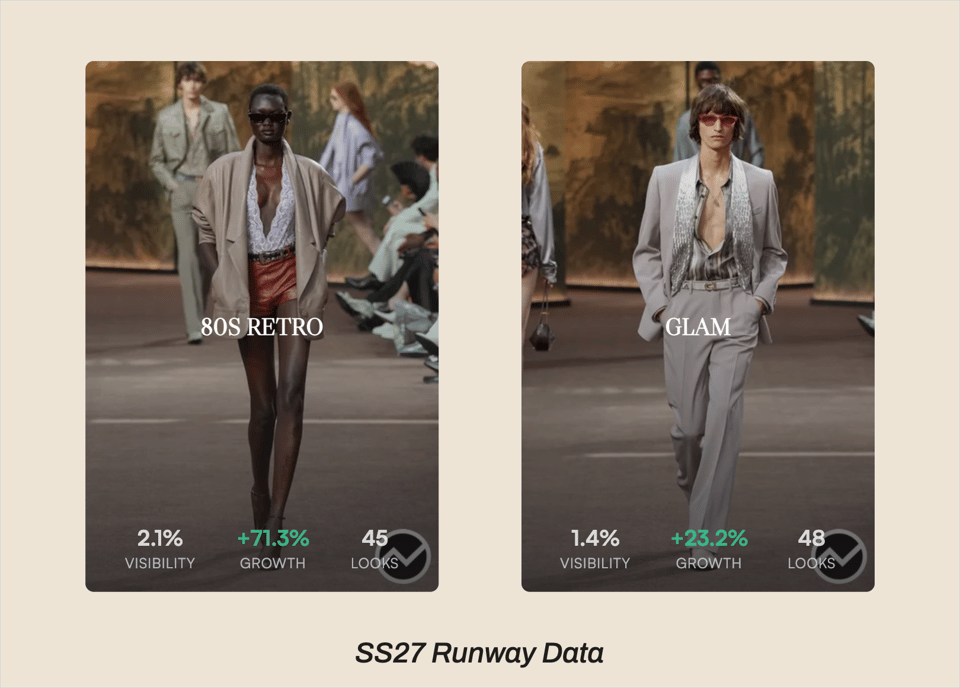
Pinterest names its related 2026 direction Glamoratti. Its forecast records growth of 225% for “80s luxury” and 90% for “baggy suit.” Those figures concern Pinterest searches in the report’s historical comparison period, rather than garment sales. They make this a direction to investigate, with collection depth determined by more specific product evidence.
The historical reference: power, visibility and constructed shape
Power dressing is a useful starting point because its central design device is immediately legible: an expanded upper body. The V&A places structured power suits within its account of early-1980s fashion and describes the dramatically extended shoulders in Westwood and McLaren’s Witches collection. The decade offered several ways to construct a forceful silhouette.
For a contemporary designer, that history raises an interesting question. How much of the original visual authority can be preserved while making the garment feel easier to wear?
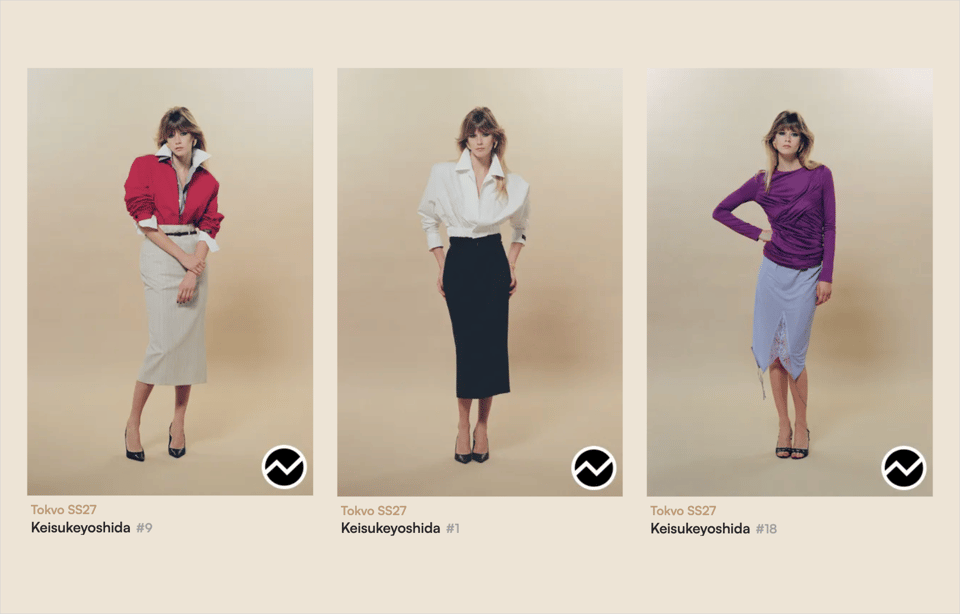
One answer is to separate structure from stiffness. Keep definition at the shoulder and collar, then let the body move. Another is to use an expressive proportion in an otherwise restrained outfit. The historical reference stays readable without requiring every item to reproduce the same decade.
There is also a cultural choice in how the story is presented. Describing the clothes through proportion, craft and personal expression gives them a broader appeal than suggesting that conspicuous wealth is an aspiration everyone shares.
The backbone: shoulder, volume and a focal point
Start with the shoulder. A squared shoulder, an extended shoulder and a rounded padded shoulder create different bodies. Specify the intended outline in the design brief, then judge it from the front, side and back. Increasing jacket width alone will not reproduce controlled tailoring.
Next, decide where the volume goes. A broad jacket can sit above a long, fluid trouser or contrast with a narrower lower half. Both are viable, but they communicate different attitudes. The first feels expansive; the second gives the upper body more drama.
Finally, choose a focal point. A high collar, strong lapel, substantial buckle or sculptural earring can organize the look. When all four compete, the eye struggles to understand which design decision matters most.
This is the aesthetic’s practical backbone: a deliberate outline, enough movement to keep it wearable, and a detail that makes the composition memorable.
Which pieces belong in the collection?
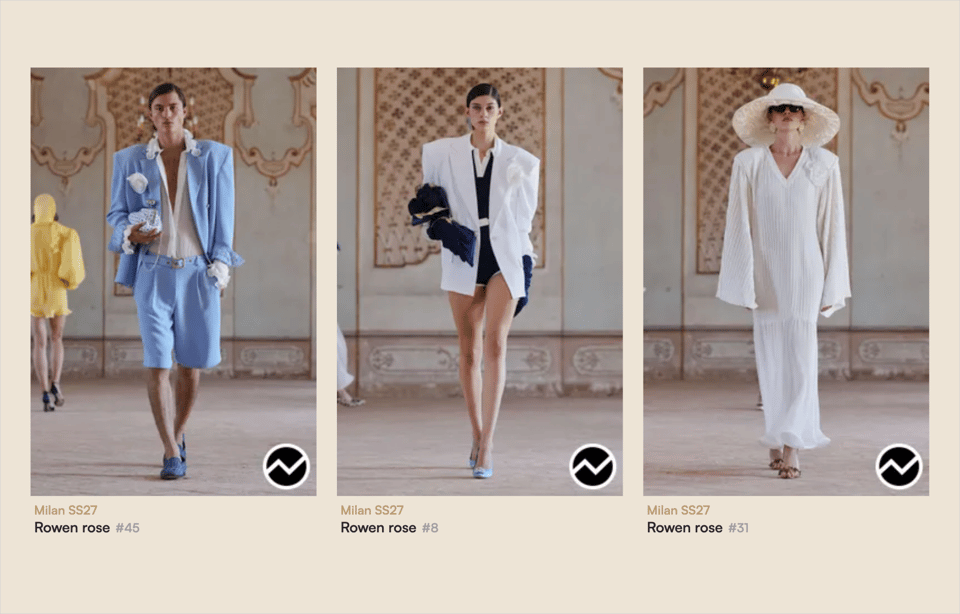
An extended-shoulder blazer should lead the story. Consider a single-breasted version for an accessible entry and a double-breasted version for a more enveloping silhouette. Test button stance alongside length; a change of a few centimetres can alter the perceived waist and balance.
A pleated wide-leg trouser gives the jacket room to breathe. Develop the trouser as a standalone product too, styling it with a compact knit or simple shirt. If its only convincing use is beside the matching blazer, its role in the assortment becomes narrower.
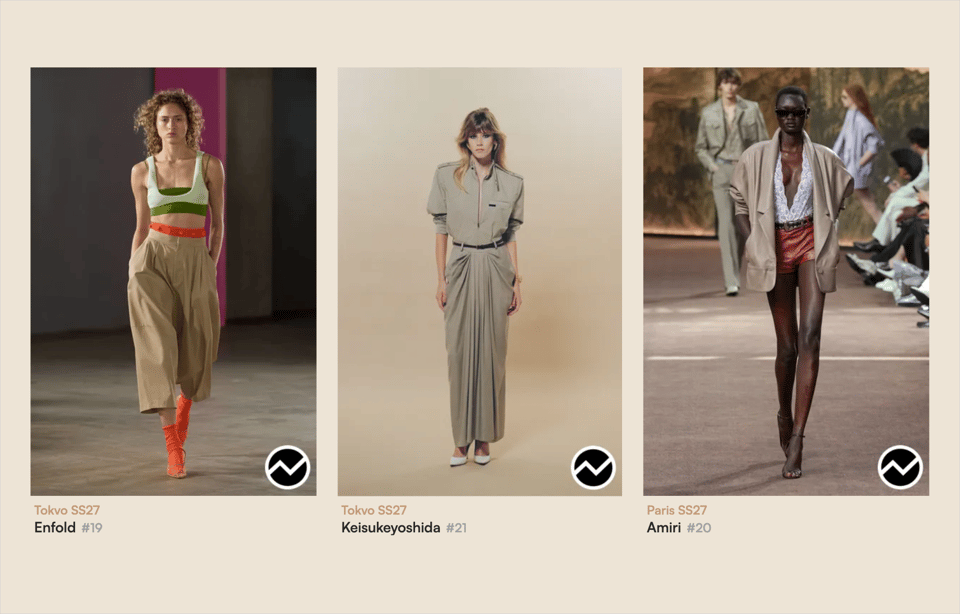
A funnel-neck jacket provides an alternative for customers who rarely wear suits. It carries the emphasis upward while working with denim, tailored shorts or a column skirt. The collar should hold the intended shape comfortably when open as well as closed.
A fine-gauge high-neck knit can connect the outerwear and tailoring. Finish with one substantial accessory: a cuff, belt or brooch. Accessories should reinforce the line of the garment, particularly at the wrist, waist or lapel.
Fabric and color: build the outline before adding shine
Choose cloth according to the part it needs to play. A jacket requires sufficient body to support the shoulder and lapel. A trouser may need a softer fall. Matching color does not automatically mean the same fabric will deliver both shapes successfully.
Wool twill, wool blends and compact woven fabrics are useful starting points for sampling. For lighter collections, test reduced internal construction and cloths that retain a clean surface without making the garment unnecessarily heavy.
A proposed palette could begin with charcoal, espresso and cream, then introduce one saturated tone such as cobalt or deep red. Gold-toned hardware can provide contrast. These are design suggestions, not measured color forecasts.
Use satin or lustrous surfaces where they reveal a construction detail. A luminous lapel facing or fluid blouse can create depth within a tonal outfit. Giving every surface equal shine can flatten the hierarchy that makes strong tailoring compelling.
How to adapt maximalist tailoring to your brand
For a contemporary essentials brand, begin with existing tailoring blocks. Adjust shoulder definition, lapel scale and trouser volume while retaining familiar colours and everyday styling. This makes the new direction recognizable within the customer’s established wardrobe.
For a fashion-led label, explore stronger contrasts: a sculpted jacket with a soft skirt, a high collar with open neckline styling beneath, or a dramatic suit worn with flat footwear. Decide which contrast belongs to the brand before multiplying options.
For menswear, keep the relationship between jacket length, trouser rise and shoe shape visible in fittings. A generous suit can lose its intended rhythm if the trouser break obscures the footwear or the jacket closes at an awkward point.
A starting capsule could contain one hero suit, one high-collar outerwear piece, two supporting tops and a small accessory group. Treat that as an illustrative structure. Actual unit depth should follow price, customer response and category performance.