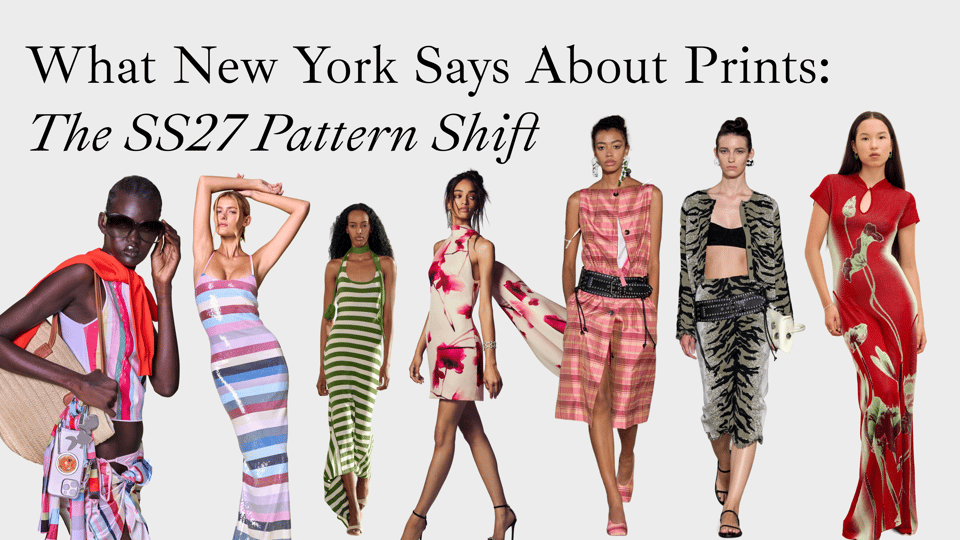
What New York Says About Prints: The SS27 Pattern Shift
New York Fashion Week still has its final shows ahead, but its SS27 print story is already taking shape. T-Fashion has completed the analysis of every show received so far, making the current pattern data available while the week is still unfolding.
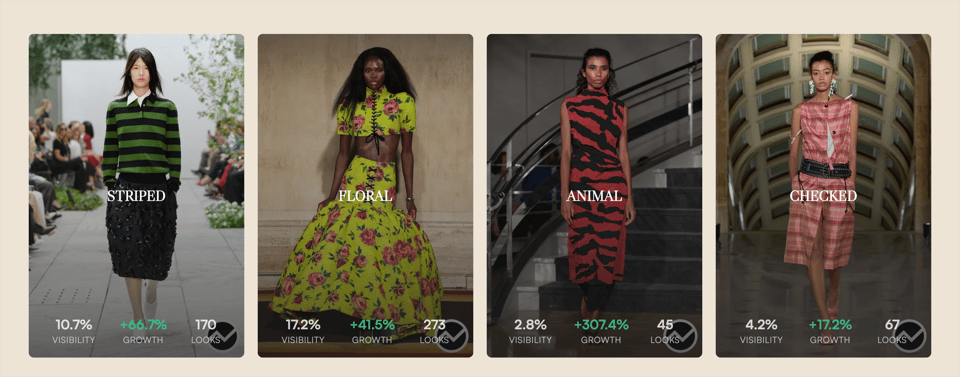
Florals lead in visibility. Stripes are growing across a broad group of designers. Within checks, gingham is moving sharply upward as classic checks decline. Animal patterns bring some of the strongest growth in this edit.
For teams developing SS27 collections, these early distinctions matter. They create time to refine a print brief, explore fabric options and test colorways before the final runway reviews arrive.
New York’s mood helps explain the direction. Joy, tailoring, sophistication and sculptural silhouettes are prominent in the collections analyzed so far. Our reading is a growing emphasis on clothes with personal character: pieces whose cut, color and surface allow the wearer to express a mood.
Pattern is central to that expression. A floral can make a structured silhouette feel romantic. A stripe can bring movement to a simple dress. An animal motif can give a familiar skirt an entirely different attitude. In a city where runway ideas have a close relationship with the working wardrobe, those choices deserve a closer look.
Floral prints: romance with a stronger sense of character
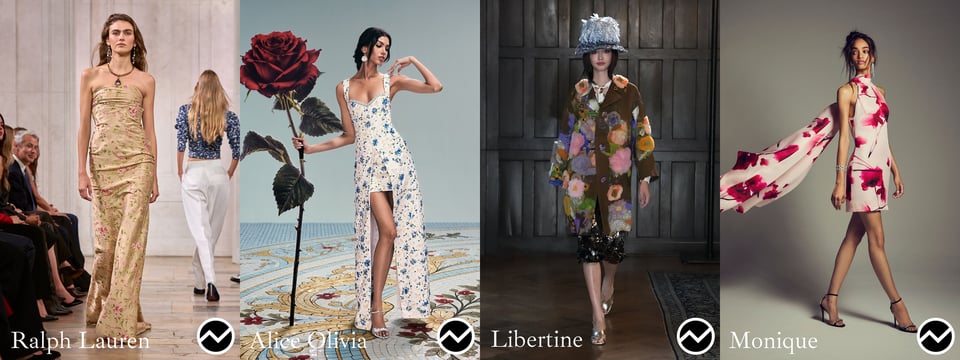
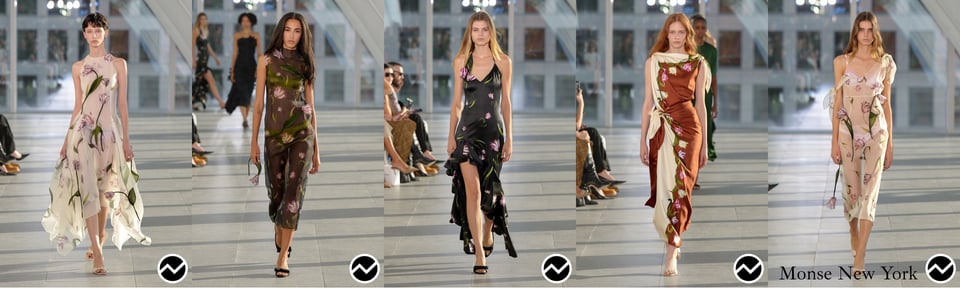
Floral is the most visible pattern in the New York analysis, appearing in 273 looks across 30 designers, with 17.2% visibility and 41.5% growth. That combination gives florals both an established presence and fresh momentum for SS27.
Romantic collections remain a natural home for flowers, but their appeal also extends into retro dressing. Motif scale, spacing and fabric can shift the mood from delicate and intimate to decorative and expressive. A small floral on a soft skirt and an oversized bloom on a sculptural dress offer two very different ways to build the same theme.
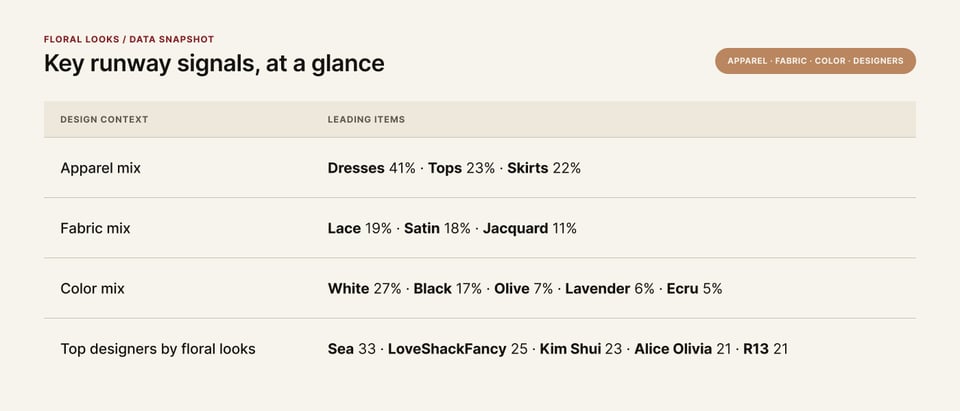
Dresses lead the apparel distribution, making them a clear starting point for floral development. Tops and skirts also have substantial representation, opening up a separates story that lets the wearer control how much pattern enters the look.
The fabric mix adds another layer. Lace gives floral motifs delicacy and texture; satin brings fluidity and sheen; jacquard makes the pattern part of the fabric’s structure. Floral development can therefore begin with the surface itself, well before the final colorway is chosen.
White provides the leading color foundation, while olive and lavender offer different expressions of softness. For a more animated retro direction, introduce fuchsia as an accent, or explore olive with brighter floral contrasts.
For SS27, give floral dresses a clear role, then carry selected motifs into tops and skirts. Keeping the motif recognizable while changing its scale or fabric can give a collection coherence and variety.
Stripes: a familiar pattern with fresh movement
Stripes are New York’s second most visible pattern, appearing in 170 looks across 33 designers, with 10.7% visibility and 66.7% growth.
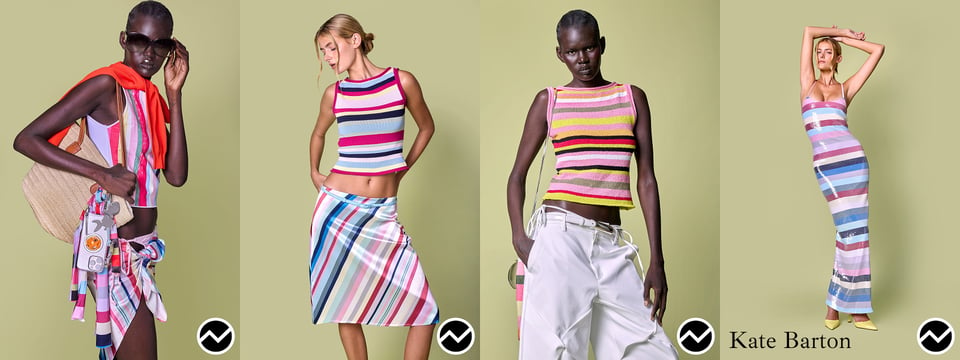
Their range is part of their strength. Stripes can support preppy, Y2K, minimalist and Riviera themes, with width, spacing and direction determining the attitude. A narrow stripe on crisp shirting feels precise; a broad band on jersey feels relaxed; a diagonal stripe can make a dress appear to move even at a standstill.
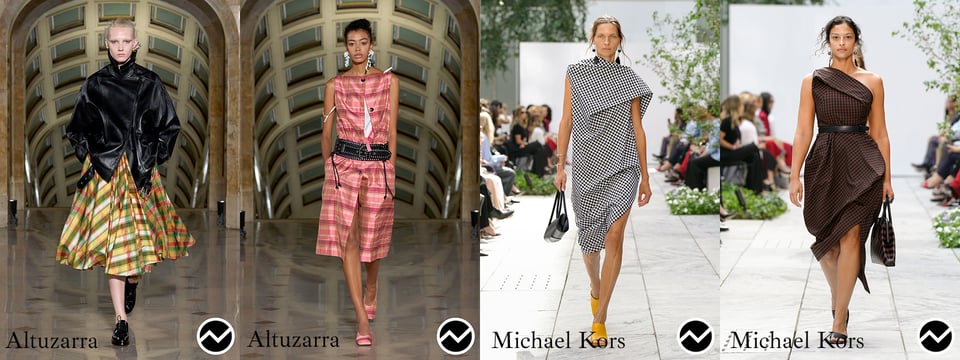
At Michael Kors, graphic stripes appeared alongside sculptural shapes and crisp tailoring, with artistic references including Carmen Herrera, Alexander Calder and Ellsworth Kelly. The connection between pattern and form was particularly clear.
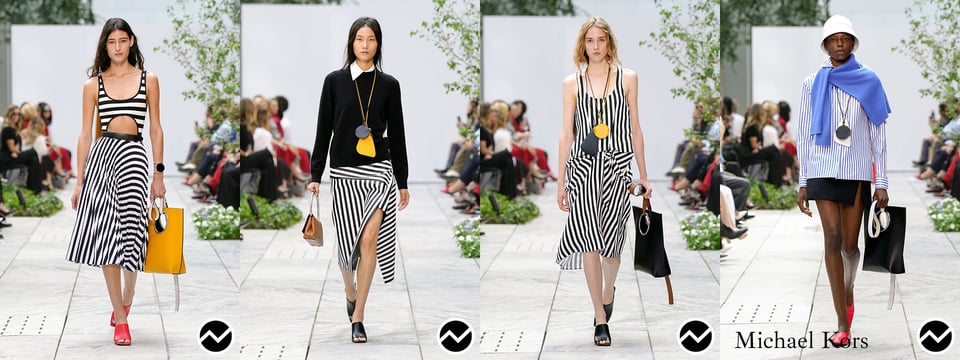
Shirts lead the distribution, supported by poplin’s crisp finish. Skirts and pants extend stripes into a broader wardrobe, while twill and jersey allow the same idea to move between structure and ease.
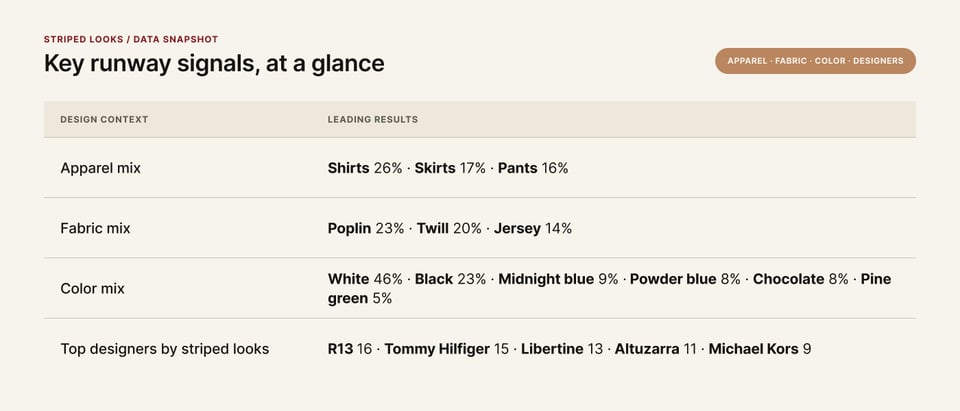
Dresses account for a further 12% of the apparel distribution. They are a particularly useful space for exploring placement: angled panels, shifts in stripe width and changes of direction can emphasize a waist, follow a drape or bring rhythm to an otherwise simple silhouette. For the wearer, the pattern becomes the defining detail of an easy, complete outfit.
White and black anchor the color story. Midnight blue supports a polished maritime mood, while pine green offers a richer option for sporty or preppy combinations.
A strong SS27 stripe brief should specify direction and scale as carefully as color. Develop crisp striped shirts as a foundation, then use dresses and skirts to explore more expressive layouts.
Checks: gingham is the shift to act on
The clearest change within checks is the split between the two directions: classic checks are down 9.9%, while gingham is up 300%. For teams building an SS27 check story, gingham deserves a dedicated place in the development brief.
The wider check family appears in 67 looks across 20 designers, with 4.2% visibility and 17.2% growth. Classic checks still account for 72% of the family, with gingham at 28%. The larger presence belongs to classic checks; the stronger growth signal belongs to gingham.
This distinction makes the category more useful to design around. A general instruction to add checks would overlook the specific pattern gaining momentum.
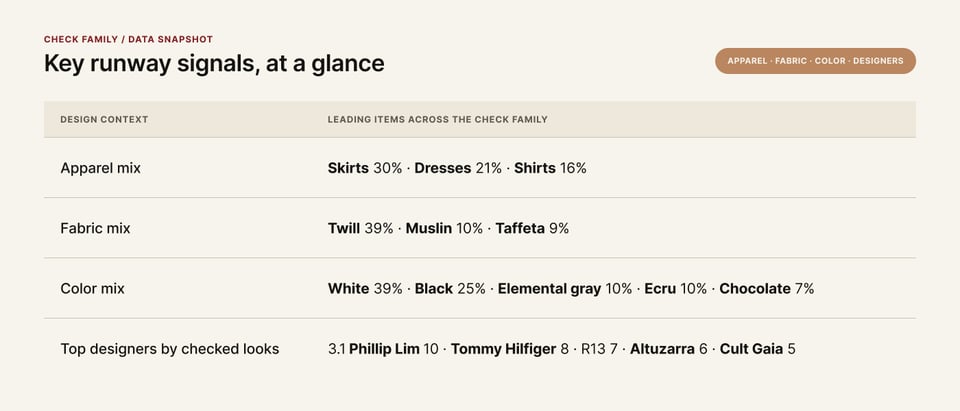
Cult Gaia shares its look count with Lafayette 148 New York, also at five. These distributions describe the check family as a whole.
Skirts lead the apparel mix, making them a practical starting point for a gingham capsule. Dresses and shirts offer further options, from a clean day dress to an easy coordinated set.
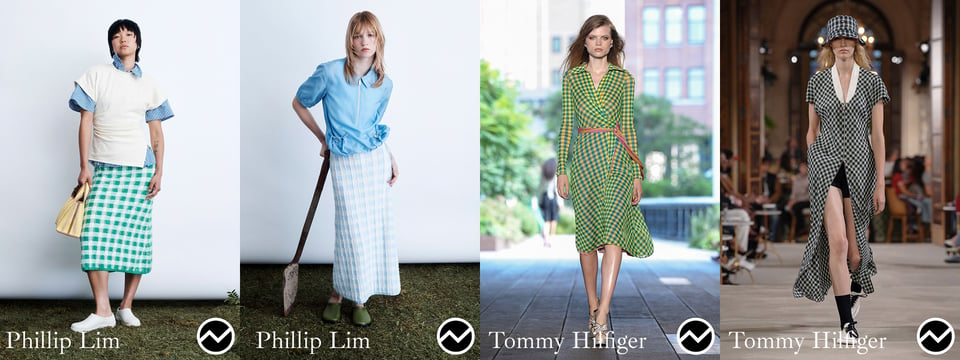
Twill’s prominence gives the wider category a structured foundation. Muslin suggests lighter interpretations, while taffeta offers a route into volume. These are useful fabrics to test when developing gingham, with drape and silhouette helping determine the final choice.
The leading white, black, gray and ecru tones support a restrained palette. Within that palette, scale can do much of the expressive work: a fine check creates a different impression from an enlarged grid on a full skirt.
Keep classic checks focused on shapes that suit the brand, and give gingham a distinct role in newness for SS27.
Animal patterns: bold character, selective opportunities
Animal patterns bring immediate character to SS27’s retro, glam and joyful looks. Their impact can come from a familiar leopard spot, the graphic rhythm of zebra or a tiger motif stretched across a fluid silhouette.
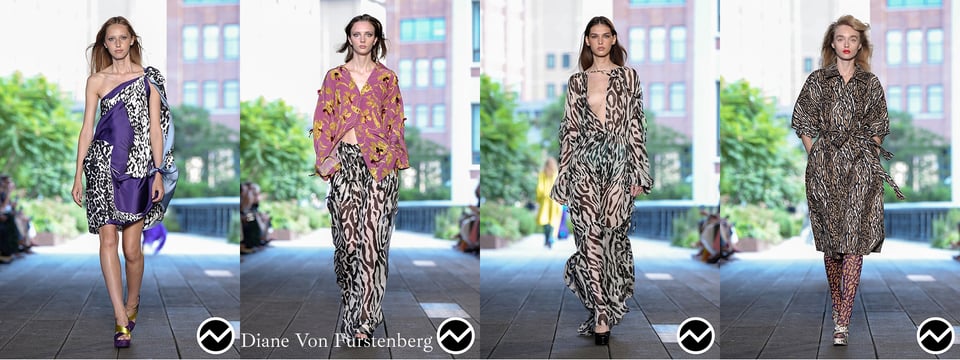
The family appears in 45 looks across 12 designers, reaching 2.8% visibility and 307.4% growth. Its footprint is still relatively focused, but its pace of growth makes it an important area for development.
Leopard is the strongest individual signal, appearing in 19 looks, with 1.2% visibility and 484.9% growth.
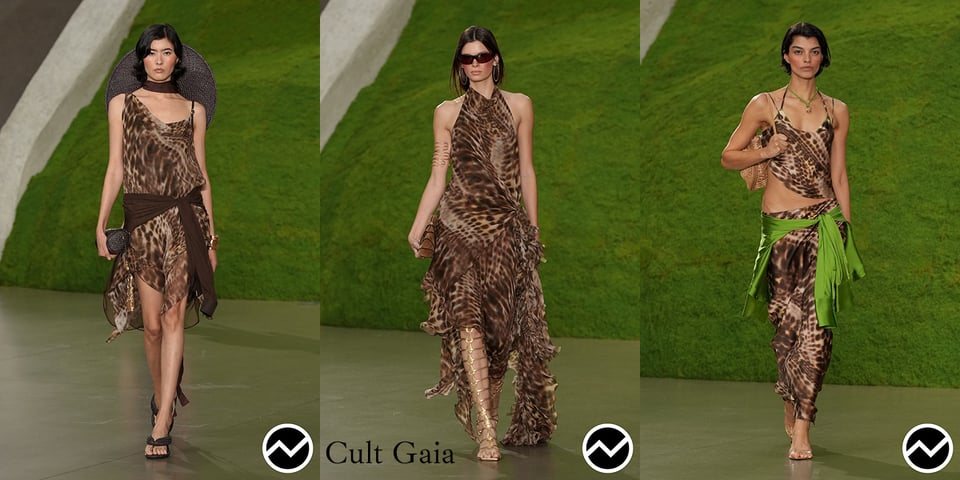
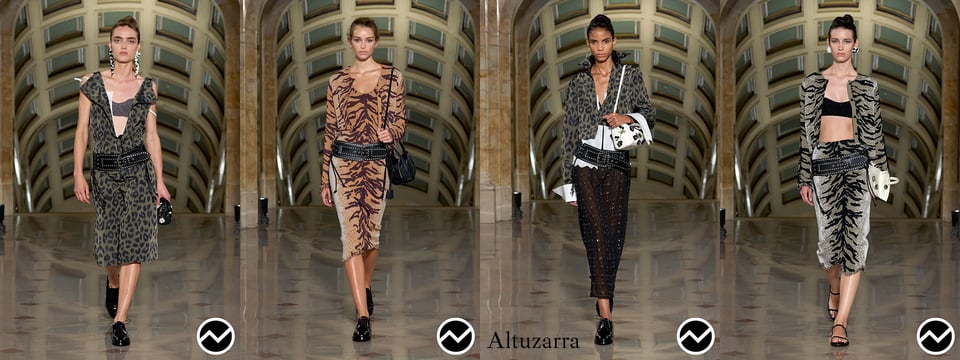
The differences within this family should shape the brief. Leopard provides the leading direction. Zebra deserves a distinct development option alongside it, while crocodile’s growth supports further exploration of reptile surfaces. Tiger adds another expressive route. Snake calls for a more selective approach given its decline.
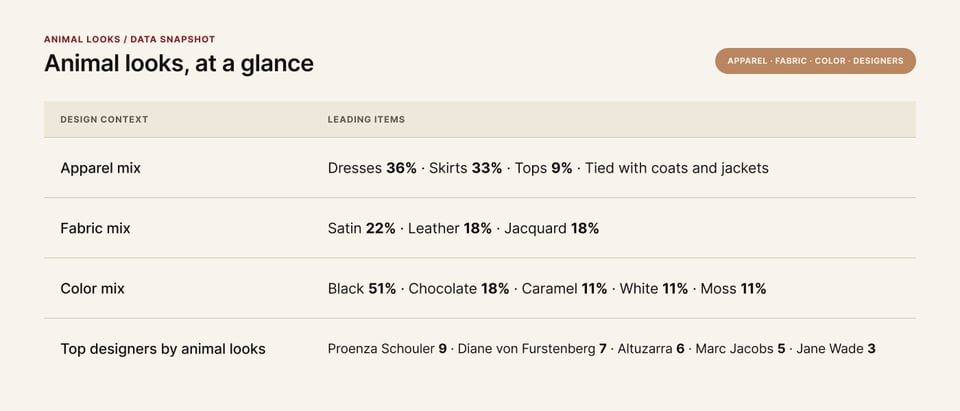
Jane Wade shares its look count with Cult Gaia, Christian Siriano and Nili Lotan, each at three.
Proenza Schouler provides a useful visual reference: tiger motifs appeared across coats, dresses, tops and skirts, showing how one animal pattern can carry through several parts of a collection.
Dresses and skirts lead the apparel distribution, while satin is the leading fabric. Its fluidity and light-catching finish make it a compelling choice for animal-pattern slip dresses, skirts and coordinated pieces.
Black and earthy tones anchor the recorded palette. For a bolder development direction, pair zebra with turquoise, vivid red or blue, or test those colors within the motif itself. A satin surface can soften the graphic effect through movement while preserving its impact.
Prioritize leopard and zebra in a focused selection of statement pieces. Let fabric, scale and color give each option its own character, and keep snake development selective.
A head start on the SS27 print brief
New York is already offering specific directions for collection development: floral dresses with texture, stripes defined by placement, a dedicated gingham story and a focused animal selection led by leopard and zebra.
The value of seeing this now is practical. Teams can begin reviewing motifs, requesting fabric options and testing color combinations while the final shows are still arriving. Each additional collection can then help refine a brief already in progress.
The full New York SS27 pattern analysis is available on T-Fashion, with the looks and designer breakdowns behind these figures. To explore the current data and follow how the picture develops, get in touch .
Data source: T-Fashion, New York Spring/Summer 2027 womenswear snapshot, 13 September 2026. Visibility describes a pattern’s presence in the analyzed looks; growth figures are the YoY comparisons.